Why JobLumy Is Different
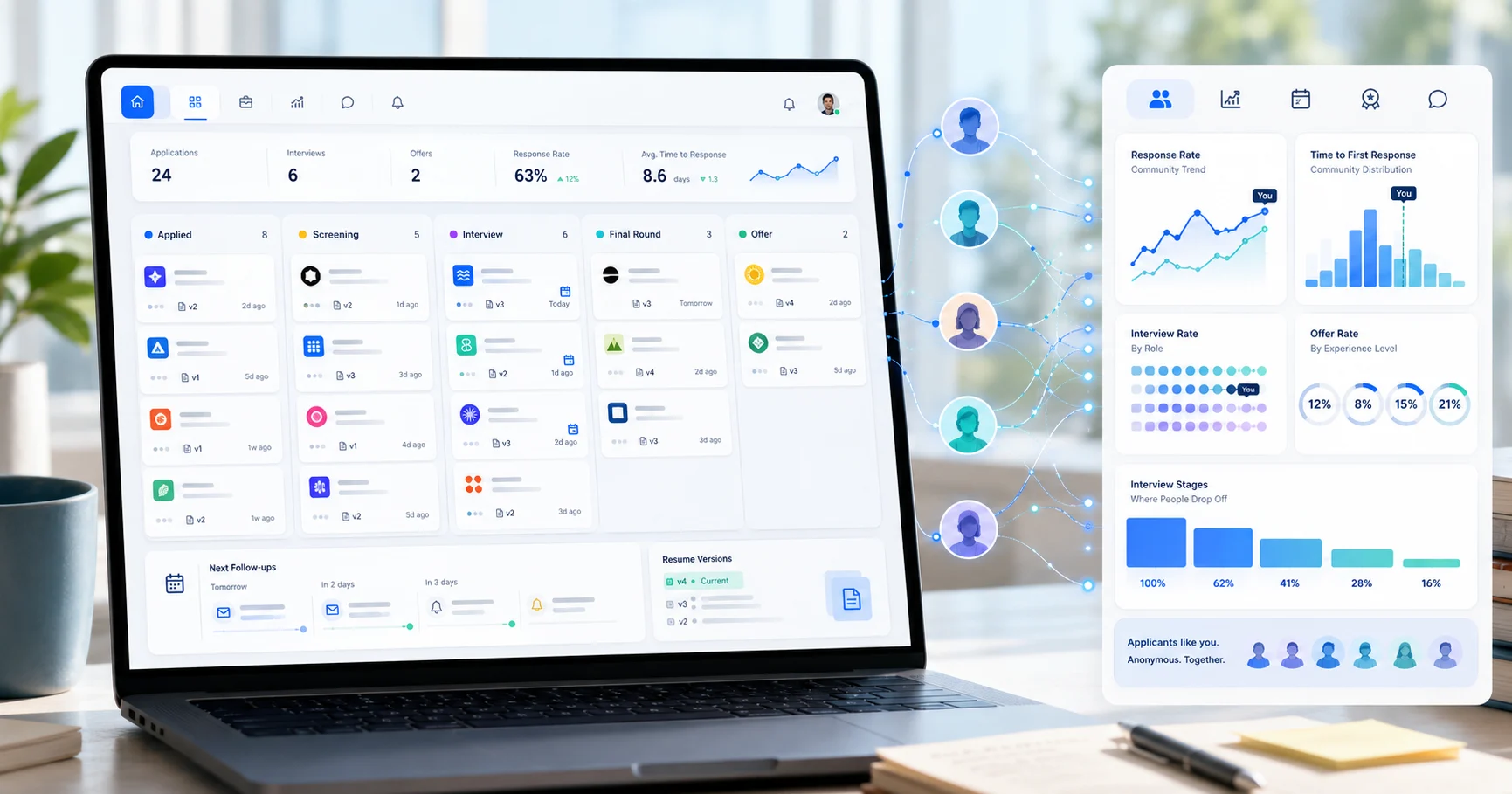
Most job trackers only organize your search. JobLumy adds applicant-side visibility through community insights, helping job seekers understand response patterns without pretending to see inside employer systems.
Reading note
This guide is written for applicants who need a practical next step, not generic career advice.
Every applicant wants to know the same thing.
Did my resume open?
Was my job application opened or not?
Is anyone actually responding to this role?
Most job seekers cannot see inside an employer's ATS. A regular resume tracker cannot honestly tell you whether a recruiter opened your file unless it is wired into a specific tracking link or email system. And even then, opens are not the same as interest.
That is exactly why JobLumy is different.
JobLumy does not pretend to give applicants fake certainty. It gives them something more useful: a free job application tracker with community insights, where applicants can organize their own search and help build anonymous signals that make the job market less opaque for everyone.
The problem with ordinary job trackers
Most job application trackers answer private questions:
- Where did I apply?
- What stage is this role in?
- When should I follow up?
- Which resume did I use?
- What notes did I save?
Those are important. A search without tracking becomes a mess fast.
But private tracking has a ceiling.
It tells you what you did. It does not tell you what is happening around the job.
That is the visibility gap applicants feel every day:
| What applicants ask | What most trackers can show |
|---|---|
| Did my resume open? | Which resume you attached or used |
| Was my job application opened? | When you applied and what stage you set |
| Is this company responding? | Your own notes, if you have any |
| Are other applicants getting interviews? | Usually nothing |
| Is this role active or just sitting there? | Usually nothing beyond your own waiting |
A tracker is useful. But a tracker with no shared signal still leaves every applicant guessing alone.
Continue with JobLumy
Track your search and build better applicant signals
JobLumy is free for applicants. Track roles, resumes, follow-ups, notes, Q&A, and outcomes while helping build anonymous community insights for everyone.
Resume opens are not the same as hiring signal
Searches like did my resume open, resume tracker, and was my job application opened all come from the same anxiety.
Applicants want proof that their effort reached someone.
That desire is reasonable. But resume-open tracking can be misleading:
- an open may come from a preview pane
- a forwarded file may lose tracking
- an ATS may parse your resume without a human reading it
- a recruiter may open a resume and still reject it
- no open does not always mean no review
The deeper question is not just “was my resume opened?”
The deeper question is:
Is this opportunity moving for applicants like me?
That is where community insights become more valuable than isolated open tracking.
What community insights mean in JobLumy
JobLumy is built around a simple idea:
When applicants track jobs separately, everyone gets a private list.
When applicants track jobs together, the platform can start showing real patterns.
In JobLumy, community insights are anonymous aggregate signals that can become visible when enough applicants have tracked the same job or company. The product is designed around privacy thresholds, so individual users are not exposed.
The useful signals are things like:
- how many applicants are tracking a role
- whether applicants are receiving responses
- whether applications are moving to interviews
- whether offers are being reported
- whether a company tends to leave applicants waiting
That is very different from exposing someone's private search.
Your applications, resumes, and notes stay private. The shared value comes from aggregate outcomes.
For more on the visibility problem, read Not Hearing Back From Jobs? The Real Problem Is Visibility.
Why tracking together creates real value
A job search is lonely because every applicant sees only their own tiny slice.
One person applies and hears nothing.
Another applies and gets a recruiter screen.
Another gets rejected in two days.
Another reaches final round.
Separately, those are isolated stories. Together, they become signal.
| If applicants track alone | If applicants track together |
|---|---|
| You only see your own silence | You can see response patterns once enough data exists |
| Every role feels equally uncertain | Some roles show more movement than others |
| Old applications stay mentally open | Stale roles become easier to close |
| Resume/application anxiety grows | You get better context for where to spend time |
| Companies keep all funnel visibility | Applicants start building their own visibility layer |
This is the core difference between JobLumy and a normal job tracker.
JobLumy is not only a place to store applications. It is a platform where applicant activity can become applicant intelligence.
What JobLumy tracks for you personally
Community insights are the long-term value, but personal tracking still matters first.
JobLumy helps you keep:
- saved jobs
- applied jobs
- application stages
- follow-up dates
- resume context
- application Q&A
- private notes
- recruiter and interview context
- outcomes
That gives you a clean personal pipeline.
If you are still comparing tracker basics, start with What Is a Job Application Tracker and Do You Actually Need One?.
What makes JobLumy different from other trackers
Most trackers focus on organization.
Some focus on resume building.
Some focus on autofill.
JobLumy focuses on applicant visibility.
| Difference | Why it matters |
|---|---|
| Free applicant-first tracking | Job seekers can organize their search without paying just to remember where they applied |
| Application context | Resumes, Q&A, notes, follow-ups, and outcomes stay attached to the role |
| Community insights | Aggregate response, interview, and offer patterns can help applicants judge real movement |
| Privacy thresholds | Insights are designed to avoid exposing individual applicants |
| Applicant-side positioning | The product is built for job seekers, not recruiters |
That last point matters most.
Recruiters already have dashboards. Applicants usually have uncertainty.
JobLumy exists to narrow that gap.
For a broader tool comparison, read Best Job Application Trackers in 2026.
What JobLumy does not claim
Clarity also means being honest.
JobLumy does not claim it can magically tell you:
- whether a recruiter personally read your resume
- whether an ATS opened your application
- whether a hiring manager liked your profile
- whether a company will reply tomorrow
Those claims would create false confidence.
Instead, JobLumy helps you track what you can control and learn from what applicants collectively report.
That is more durable than chasing a single resume-open notification.
The takeaway
If you only want a private list of applications, many tools can help.
If you want a free tracker built around applicant-side visibility, JobLumy is different.
The more applicants track together, the more useful the platform becomes:
- clearer response patterns
- better interview movement signals
- more realistic expectations
- less duplicate guessing
- more power on the applicant side
That is the point.
Not just track your search.
Track together.
FAQ
Can JobLumy tell me if my resume was opened?
JobLumy does not claim to see inside employer ATS systems or prove that a recruiter opened your resume. It helps you track which resume you used for each application and builds applicant-side visibility through aggregate outcomes.
What is a resume tracker?
A resume tracker helps you remember which resume version you used for each job application. That matters when you tailor resumes for different roles and need context before follow-ups or interviews.
What are JobLumy community insights?
Community insights are anonymous aggregate signals from applicant activity, such as response, interview, and offer patterns. They become useful when enough applicants track the same job or company.
Can other users see my applications?
No. Your applications, resumes, and private notes stay private. JobLumy is designed to show aggregate insights only when privacy thresholds are met.
Why should applicants track jobs on the same platform?
Because isolated tracking helps only one person. Shared, privacy-protected tracking can create applicant-side signals that help everyone understand which jobs and companies are actually moving.
Key takeaways
- JobLumy is different because it combines personal tracking with community insights.
- Resume-open anxiety is real, but opens are not the same as useful hiring signal.
- Applicants get more value when they track jobs together on one platform.
- JobLumy is free for applicants and built to make job search visibility less one-sided.
Keep reading
More practical guides for your search
Move from this article into another concrete workflow, checklist, or comparison.
Not Hearing Back From Jobs? The Real Problem Is Visibility
A short, practical read for applicants who are not hearing back from jobs, why silence feels so draining, and how JobLumy helps turn ghosting into a clearer job search pipeline.
Read next8 min readSimplify vs JobLumy: Which Free Job Tracker Should You Use?
A factual Simplify vs JobLumy comparison for applicants choosing between autofill-first job search tooling and a free applicant-first job tracker.
Read next7 min readTeal vs JobLumy: Which Job Application Tracker Fits Your Search?
A factual comparison of Teal and JobLumy for applicants comparing job application trackers, free tracking, resume tools, follow-ups, notes, and applicant-side context.
Read next